












Ready to bolster your defenses
Uncover how we can help put your resilience to the test.


The rapid adoption of artificial intelligence (AI) agents is transforming how organizations automate workflows,
he Rise of Agent-to-Agent (A2A) Attacks: When bots attack bots
The rapid adoption of artificial intelligence (AI) agents is transforming how organizations automate workflows, interact with customers, and manage digital operations. Unlike traditional AI systems that operate solo, modern AI agents increasingly communicate and collaborate with other agents to complete complex tasks. This emerging paradigm—often referred to as Agent-to-Agent (A2A) interaction—promises unprecedented efficiency and scalability.
However, as AI agents become interconnected, a new category of cyber threats is emerging, known as Agent-to-Agent (A2A) attacks. These attacks exploit trust relationships, communication protocols, and autonomous decision-making processes between AI systems. While organizations have spent a long time, we’re talking decades securing human-to-system and system-to-system interactions, securing autonomous agent ecosystems presents an entirely different obstacle course and challenge- think Triathlon but for bots.
As AI agents gain greater autonomy and access to critical business functions, A2A attacks may become one of the defining cybersecurity risks of the next decade, however we define a decade in the fact paced world of AI developments. And that’s saying a lot.
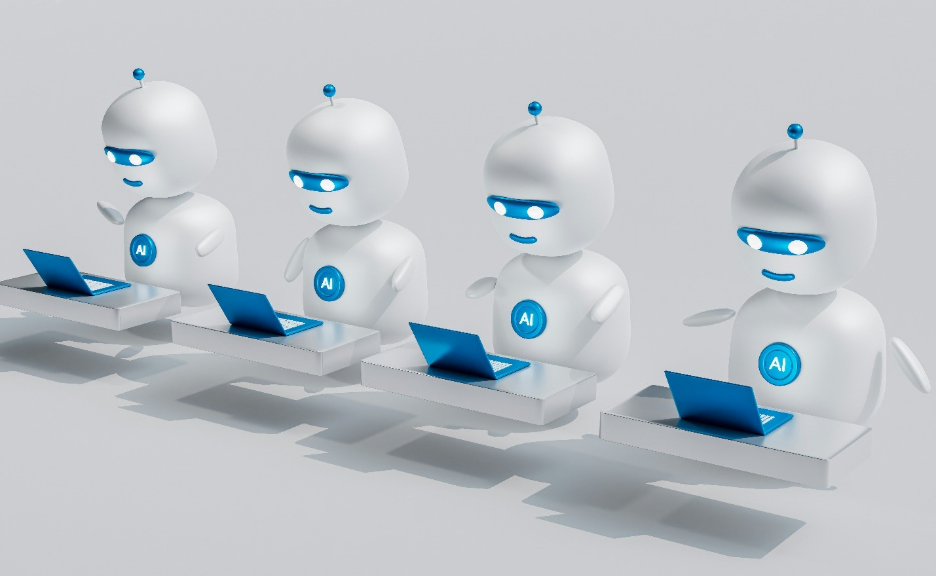
Understanding Agent-to-Agent Communication
Modern AI agents are increasingly designed to collaborate. One agent may gather information, another may perform analysis, and a third may execute actions such as making purchases, modifying infrastructure, or updating databases. These interactions can occur across organizational boundaries, cloud environments, and digital platforms.
Here’s a breakdown of some examples:
To facilitate these interactions, agents exchange instructions, context, credentials, recommendations, and operational data. This creates a growing attack surface that extends beyond traditional APIs and user interfaces.
Let’s explain what these are.
An Agent-to-Agent attack occurs when a malicious actor manipulates, impersonates, compromises, or exploits one AI agent to influence the behavior of another agent. Rather than directly targeting human users, attackers target the trust relationships between autonomous systems.
These attacks can take several forms which are listed below:
1. Agent Impersonation
An attacker creates a rogue agent that masquerades as a legitimate one. If authentication mechanisms are weak, trusted agents may accept instructions from the malicious agent.
For example, a fraudulent procurement agent could issue purchase requests that appear to originate from an authorized department.
2. Prompt Injection Propagation
Prompt injection attacks become significantly more dangerous in agent ecosystems.
A malicious agent can embed hidden instructions within data shared with another agent. When the receiving agent processes the information, it may unknowingly execute unauthorized actions.
This creates the possibility of attack chains that spread across multiple agents.
3. Trust Exploitation Attacks
What is old is new again, Trust Exploitation attacks!
Many agent systems rely on reputation, trust scores, or predefined relationships.
Attackers may exploit these mechanisms by compromising a trusted agent and using it as a launching point for broader attacks. Once trust is established, malicious instructions can move through the network with minimal scrutiny.
This represents yet another form of lateral movement.
4. Context Poisoning
AI agents often maintain memory and contextual information to improve performance.
Over time, the Attackers can manipulate this context, gradually influencing an agent's future decisions. When poisoned context is shared with other agents, the corruption can propagate throughout the ecosystem.
5. Autonomous Action Hijacking
As agents gain the ability to execute real-world actions, attackers may strive to hijack these capabilities.
Potential targets include the following:
A compromised agent may appear to operate normally while carrying out unauthorized activities.
A2A attacks are different for a few reasons. Traditional cyberattacks often rely on exploiting software vulnerabilities or deceiving human users. A2A attacks introduce several unique characteristics which are outlined below.

Speed and Scale
AI agents can communicate and act in milliseconds. A compromised instruction can spread across multiple systems faster than human defenders can react.

there are several high-profile examples where generative AI was used to produce attack ads or rapid-response political content at "AI speed"—often within hours or days instead of the weeks traditional production requires.
Some of the best examples of campaigns include:
Florida Bleeds known as Jay Collins which happened this year: AI-generated dystopian attack videos depicting a fictional future under opponent Byron Donalds. This is one of the clearest examples of AI attacks.
Never Back down which happened in 2023 was AI-generated voice cloning of Donald Trump attacking an opponent. This demonstrated cinematic attack content at low cost and high speed.
Republican National Committee “Beat Bide” again 2023. AN entire ad built with AI generated imagery imagined another Biden term. It demonstrated an entire political spot from prompts.
What made the Florida Bleeds-style campaign different?
Unlike earlier AI attacks that mostly experimented with images or voice cloning, the Florida Bleeds content resembled a movie trailer:
Instead of spending tens of thousands of dollars on filming, creators reportedly used AI video generation and editing tools to produce multiple attack videos quickly. The key lesson is that the advantage isn't simply generating content faster—it's dramatically shortening the feedback loop. Teams can create many more variations, test them almost immediately, learn what performs, and launch the next iteration while the opportunity is still fresh.
Autonomous Decision-Making
Agents may independently decide which actions to take based on received information. This creates uncertainty regarding how malicious inputs will be interpreted and executed.
Dynamic Trust Relationships
Unlike static system integrations, agent ecosystems may establish temporary relationships on demand. Verifying trust becomes more complex as agents continuously discover and interact with new counterparts.
Limited Human Oversight
Organizations increasingly deploy agents to reduce manual intervention. While this improves efficiency, it also reduces opportunities for us to detect suspicious activity before actions are executed. Although large-scale A2A attacks remain an emerging threat, several realistic scenarios illustrate their potential impact in real-world risk scenarios.
Financial Services
A compromised trading agent could manipulate market data shared with other agents, influencing investment decisions across an organization.
Supply Chain Networks
An attacker could infiltrate a supplier's agent and transmit false inventory information, triggering incorrect purchasing decisions and operational disruptions.
Cloud Infrastructure
A malicious infrastructure agent could instruct trusted deployment agents to provision unauthorized resources or alter security configurations.
Healthcare
Clinical support agents exchanging patient information and treatment recommendations could become targets for data manipulation, potentially affecting healthcare outcomes.
Security Challenges
Defending against A2A attacks requires rethinking cybersecurity strategies.
Key challenges include:
Authentication and Identity
Organizations must establish strong mechanisms for verifying agent identity, including cryptographic authentication and certificate-based trust models.
Communication Integrity
Agent messages should be protected against tampering through encryption, digital signatures, and secure communication protocols.
Explainability and Auditability
Security teams need visibility into how agents make decisions and why actions were taken.
Comprehensive logging and audit trails become critical for incident investigation.
Trust Management
Organizations must move beyond simple allow-lists and implement dynamic trust evaluation mechanisms that continuously assess agent behavior.
Containment and Isolation
Compromised agents should be isolated quickly to prevent malicious instructions from propagating throughout the ecosystem. There should also be attention brough to Emerging defense strategies. Several approaches are gaining attention as organizations prepare for agent-based environments. These are outlined below:
Zero-Trust for AI Agents
Every interaction should be verified, regardless of whether an agent is internal or external. Trust should never be assumed.
Agent Sandboxing
Limiting agent permissions and execution environments can reduce the impact of successful compromises.
Behavioral Monitoring
Security systems can analyze agent communications for unusual patterns, suspicious instructions, or abnormal decision-making behavior.
Multi-Agent Verification
Critical actions can require validation from multiple independent agents before execution, reducing the risk posed by a single compromised system.
AI-Powered Security Agents
Defensive agents may monitor other agents, creating autonomous security layers capable of detecting and responding to threats in real time.
A2A Security and it’s future
The rise of AI agents is creating a new digital ecosystem where autonomous systems collaborate, negotiate, and act on behalf of us humans. While this evolution promises significant productivity gains, it also introduces novel attack vectors that traditional cybersecurity frameworks were not designed to address.
Agent-to-Agent attacks represent the next phase in the cybersecurity arms race. As organizations deploy increasingly autonomous AI systems, securing agent identities, communications, trust relationships, and decision-making processes will become a strategic priority.
The organizations that recognize and prepare for these risks early will be better positioned to harness the benefits of AI-driven automation while minimizing the dangers of an interconnected agent economy.
What’s next?
Cybersecurity has historically focused on protecting people, devices, and applications. The emergence of AI agents adds a new category of digital actor that must be secured.
Agent-to-Agent attacks are not simply an extension of existing threats they represent a fundamentally new challenge arising from autonomous machine collaboration. As AI agents become more capable and interconnected, security leaders must begin treating agent ecosystems as critical infrastructure.
The future of cybersecurity may depend not only on how well people defend systems, but also on how well AI agents defend one another.
Uncover how we can help put your resilience to the test.
